Are you considering investing in solar technology? Are you wondering what solar costs in 2024? Thanks to the government rebate the technology is affordable for more Australians, and in some areas, you might even get extra state rebates.
However, you will still have to pay a considerable amount of money upon installation. So, how much does solar cost in 2024? The answer is not straightforward, as many factors will affect the price.
In this article, we will show you what you should expect to pay.
The average solar cost in 2024
If you are planning to invest in a standard 6.6 kW solar panel system in 2024, you can expect it to cost around $6,000. However, the average price varies a lot from state to state. Here is the average installation cost for a 6kW system in different parts of Australia:
- Adelaide (SA): $4,770
- Melbourne (VIC): $5,420
- Brisbane (QLD): $5,860
- Sydney (NSW): $5,370
- Canberra (ACT): $5,730
- Darwin (NT): $9,040
- Perth (WA): $4,900
- Hobart (TAS): $7,290
So, if you live in Northern Territory, you might expect the installation costs to be bigger than in South Australia or Victoria. But in most areas of Australia, the price of a 6kW system is between $4,500 and $6,000.
What factors will affect the solar cost in 2024?
There are a number of different factors that will affect your solar costs. We will now take a closer look at some of them.
The solar panel system size
The size of your solar system is one of the most important price factors. In most cases, the price will increase as the system size increases. A 3kW system will usually cost far less than a 10kW system, for instance.
Most Australians will typically install a 6.6kW system, as this will cover the energy needs of the average household.
System type and efficiency
There are a number of different solar system types on the market. You will be able to choose between solar panel systems based on different technologies, like monocrystalline, polycrystalline and thin-film solar systems.
Monocrystalline solar panels are often considered the best choice when it comes to efficiency but are also the most expensive of the three.
In addition to this, you will find both grid-tie, hybrid and stand-alone solar panel systems. A hybrid system will often cost way more than a classic grid-connected system.
The government rebate will affect solar costs in 2024
When installing a solar panel system, you will be able to receive a federal government rebate. However, the rebate size will vary based on which state you live in.
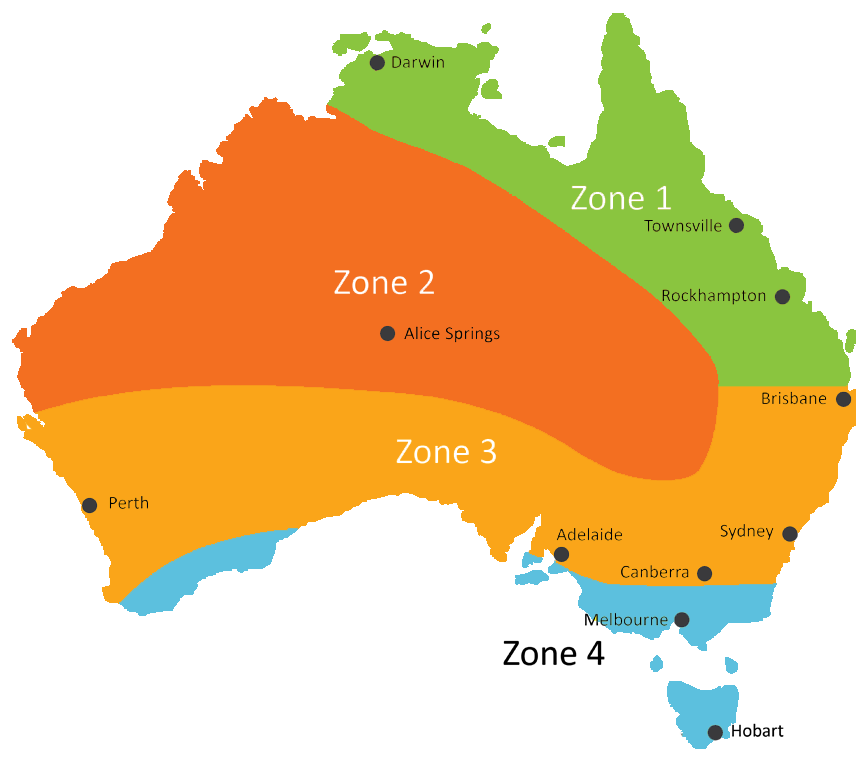
In general, the rebate will depend on which STC zone you live in. Central Australia and North West Australia are defined as zone 1, while Darwin is in zone 2. Brisbane, Sydney, Adelaide and Perth are in zone 3, and Melbourne and Tasmania are in zone 4.
The lower the zone, the bigger the rebate.
State rebates
Besides the federal government solar rebate, some states will also have local state rebates. These rebates can reduce your solar costs in 2023. You might also get rebates for batteries, panels and the inverter.
For instance, in Victoria, you might be able to get a battery rebate that can reduce your battery costs by as much as 50%.
The price of your installer
If you want a solar panel system on your rooftop, the installation should be performed by a certified installer. There are many different companies that may help you and the installation cost might differ from installer to installer.
Make sure to find a good installer that is accredited by the Clean Energy Council (CEC). A CEC certification is also necessary to be able to get the government rebate.

Market forces
The solar panel price is significantly lower in 2024 than it was a couple of years ago. Market forces like supply and demand will affect what solar panel technology costs.
The Australian dollar
The value of the Australian dollar might also affect the solar cost in 2024. Remember, most of the components in solar panel systems are made overseas. Because of this, the solar price will be affected by the Australian dollar’s ability to acquire the needed equipment.
This is also the reason that solar panel quotes will often come with an expiry date. That way, the installers are minimizing their risk in case of changes in the costs.
Are you looking for an affordable solar panel system?
If you plan to go solar, you can be able to save a lot of money by making good choices. Find a CEC-approved installer that can help you, and remember to check out different solar panel systems and sizes.
The state rebate will usually be included in the solar panel quote you receive, which is good to know. Find the perfect solar panel system for your household, today!